Don't ignore bleeding gums - we can help
Gum disease is one of the most common (and most preventable) dental problems we treat. With early care from our prevention-focused team, you can get your gums back to health and protect your smile for life.

What is gum disease, and how does it develop?
Gum disease (also known as periodontal disease) is an inflammation of the gums caused by the build-up of plaque around your teeth. It starts as gingivitis - the early, reversible stage where gums become red, swollen and bleed easily when you brush. Left untreated, gingivitis can progress into periodontitis, where the supporting bone around your teeth begins to break down, eventually leading to loose teeth and tooth loss.
The good news is that gum disease is highly treatable when caught early - and even at later stages, careful management can stabilise the condition and protect your remaining teeth. That's why regular hygiene appointments and dental check-ups are so important - we can spot the early signs long before you notice anything yourself.
What our gum care patients in St Margarets say
S J.
Wonderful experience this morning from booking, reception to my appointment with Rachel, hygienist. She is very knowledgeable and gave lots of good advice.

Sagar L.
The check-up and cleaning were excellent, and I really appreciate how thorough and professional you both were. You made me feel comfortable, and I'm very happy with how everything went. My teeth feel great!
Kay H.
Wow...what a relief!! I am so lucky to have found an NHS dentist near me who are welcoming and efficient. Emily Johnson was gentle, patient and thorough and clearly very knowledgeable.
Steve S.
Dr Emily and the entire staff did a fantastic job making my daughter feel comfortable on her first ever trip to the dentist. I would recommend St Margaret's Smiles to anyone looking for a professional, caring and supportive environment.
Jo R.
Rachael and Kiran were great! Rachael was a very thorough, friendly and informative hygienist. Kiran was fantastic supporting as a nurse. A great experience - from someone who never particularly enjoys visiting the dentist!
Jane R.
I am a nervous patient and Smiles made me feel at ease, especially Emily my dentist.
Glen M.
Great dentist great staff excellent service.
Neda D.
I must say my recent visit to St Margarets Smiles was extremely pleasant. Receptionist Jess was very helpful, and Rachel the dental hygienist explained so clearly how I can improve the health of my teeth. I won't be afraid to come again.
Marina L.
Great experience at this dental clinic. The staff were very friendly and gave excellent attention to my child, making him feel comfortable. Everything was explained clearly and in a very kind way. Really glad we chose this clinic.
Karen J.
As always, St Margarets Smiles is welcoming and knows its patients. I had two appointments, one with the hygienist and then with Mr Panesar. Both were done quickly and efficiently.
Anna H.
Great practice, wonderful doctors and very pleasant staff.
Catherine M.
Lovely new front teeth.
Ian B.
Excellent professional dentist practice.
Barbara D.
Great care as always!
Dagmara Z.
Very happy with the practice.
Thomas G.
Very good service, thanks.
Nombasa N.
Always a good experience.
Dan B.
Even through the midst of an IT crash everyone was super friendly and helpful.
Sophie B.
Professional, kind and helpful.
Pankaj T.
Fatima is amazing, very helpful and kind. Dentist is amazing.
David F.
Friendly staff, excellent service.
Karim A.
Fatima is lovely, always smiley face and great service.
Harriet D.
Emily is so kind and professional, it makes a big difference.
Noreen R.
I can't thank Dr Emily Johnson enough for the care she is taking with my teeth.
Lauren A.
Great experience with Dr. Emily and new receptionist staff. Very friendly and informative.
Barbara B.
Farzana - 100% the best hygienist and a thoroughly lovely person I have ever had - today was my second with her - perfect and thank you.
Caroline R.
Excellent care! Real understanding of my deafness and such supportive team. I really thank you.
Niki S.
St Margarets Smiles is the best by miles. Lisa on reception is particularly warm and friendly and puts one immediately at ease.
Laura K.
Very happy with St Margaret's Smiles. Easy to book appointments and really friendly staff. Emily and Fatima, thank you.
Ed W.
Prompt, friendly and professional treatment. Highly recommended.
Susan B.
Crown expertly fitted. Quick and efficient service. Pleasant friendly staff.
Ella D.
I had a great experience with Emily the dentist, everyone was very very friendly and made me feel at ease.
Michelle C.
I visited the hygienist today and she did a wonderful job. I haven't had them cleaned for about 6 years and she has done wonders in 30 minutes. Highly recommended!
Katherine M.
Excellent customer care. Highly recommend.
Susanna H.
My last appointment was hygienist, she was brilliant! The dental nurse with her was great too, highly recommend.
Andrew W.
A very thorough check up. Course of action clearly explained. I needed to be referred to Kingston hospital for some restorative treatment and this referral happened promptly.
Olivia L.
While going to the dentist is hardly a pleasant experience, the team really make up for it. The super lovely and personable receptionist will put you at ease before being seen by the professional and swift dentist. Having used both NHS & Private the level of care is always top notch.
Argita P.
I had a wonderful experience. The staff was friendly, professional, and made me feel comfortable from the moment I walked in. The clinic was clean and well-organised, and everything ran smoothly.
Keith S.
Very polite and friendly practice. They do take personal care of patients. I felt very comfortable. Rachel is very diligent and offered great advice. I felt very much at ease.
Ben J.
Had a great experience at St Margaret Smiles with Dr Emily and Fatima, very thorough with my examination. Lisa the receptionist was also very welcoming.
Emanuela G.
Gentle and polite manners towards my little one and professional.
Tania T.
Everyone was very kind and helpful but overall very professional.
Abigail A.
Very good service! I had Farzana as my hygienist — she was professional, friendly, and made the whole experience comfortable. Would definitely recommend!
Nigel C.
I've been coming here for years. Flexible, friendly and efficient. Dentist and hygienist.
Keith G.
The hygienist was very good, gentle and thorough, with great communication of what was happening.
Ruth S.
The hygienist did a thorough job and gave me good advice.
Kelvin L.
Dr Emily was very patient and helpful. She was treating my younger son with lots of care and explaining along about what she was doing to my son. I'll recommend her to others.
Jim M.
I'm not the best patient in the world but was very satisfied with the treatment received. Dr. Emily, assisted by Fatima did a great job of making me comfortable and carried out their work really well. All the staff seem very competent and helpful.
Tyler D.
From the receptionist to the dentist, great service, very professional, I'm glad to be a patient at this place, thank you ladies.
Brad H.
Got a checkup for myself and my toddler. Great service and friendly staff - thanks Emily for the checkup! I also went back for some dental hygiene work and my teeth are much cleaner now.
Ianstrax
All the procedures I have had have been performed with care and skill. This is a practice that I would highly recommend.
Arki H.
Rachel was amazing she deserves a bonus. Come see her immediately if you got problems.
Ester K.
Very friendly and professional dental clinic. I also found the most gentle and accommodating hygienist there for my sensitive teeth, while she cleans them very well. Short waiting time for appointments and very flexible and friendly staff and environment. My son loves going there too, for check up and hygiene appointments.
Gregory C.
The service was excellent, and the product exceeded my expectations both in ease of use and result.
Katalin P.
Excellent service. Both of my sons were treated here. We are very pleased with St Margarets Smiles.
Dot H.
I'm always nervous about visiting the dentist, but Emily and the staff were very understanding. Emily's treatment was steady and gentle. Thank you for making the visit as comfortable as possible for an anxious lady.
Liberty D.
I couldn't recommend St Margaret's Smiles more! I am someone who is a nervous client when it comes to seeing a dentist. However my experience with Emily & Farzana has been great. They both made sure I was well looked after & made me feel at ease! As soon as you walk in, the receptionists are attentive and lovely.
Duy P.
Dr Emily is very good. Highly recommended. Professional, skilful and gentle. The surgery has the latest equipment, appointments manager is also great. My whole family is now registered with Dr Emily.
Diana W.
As always a first class service... I have been at this practice since 1998... always consistently good. From fillings crowns and general care I would recommend 100%.
Derek D.
Helpful and super friendly receptionist and excellent hygienist who took great care. I'm obviously not a fan of going to the dentist but they make it far easier to have a much better experience.
Vanessa D.
Best dentist I have ever had! Dr Emily has really helped me overcome my phobias and helped manage my dental care proactively.
Ali C.
Mine and my children's experience at St Margarets Smiles is always a very positive one. A super friendly front of house team, dental staff and an amazing hygienist!
Andrea D.
Mr Panesar is an excellent dentist, who works with care and precision and is always ready to explain the treatment he is recommending. A particular thanks to two new receptionists, Lisa and Adrienne, professional and helpful and able to find a spot for a semi-urgent treatment for me. Really appreciated.
Angela K.
Hygienist Rachel was wonderful... warm and welcoming but much more ... she's informative about the process and gives clear advice!
James
Excellent care and attention kindly provided by Dr Emily and her assistant as well as by hygienist Emily. Dr Emily took care to explain everything carefully and took photographs to illustrate her explanations. She listened to my concerns equally carefully and acted accordingly.
Dean S.
I took my 1 year old for their first check up at St Margaret's Smiles, the receptionist and the 2 dental nurses were fantastic and very professional, it was also extremely clean and tidy. There was also no tears.
Susan C.
From the lovely, helpful, friendly receptionist, I think her name is Lisa, to the dentist who explains everything and will only do work necessary, this practise is amazing. I've been coming here for years and would never dream of going elsewhere. The receptionist was extremely helpful when I phoned for an emergency appointment at 9am and got one at 11am.
Joanne M.
Rachel the Hygienist was very thorough with the children and guided them on good brushing technique and answered all their questions. Adrienne on the front desk was great at keeping the children occupied while they waited. Great service and very happy kids.
Kat K.
I had a really lovely experience at my first hygienist appointment! The lady on reception was super welcoming and friendly. Rachel was really friendly and informative during my appointment where she made me feel at ease (I'm not a fan of the dentist) and made me feel really good about my teeth! The dental assistant was also very gentle and nice! The experience has made me feel much better about coming for hygienist appointments in the future.
Margot L.
I had my appointment with Rachael and it was definitely the best dental appointment I've ever had. She was so lovely and kind and explained everything step by step so I knew what was happening. Also gave very good advice and overall made sure I was comfortable and informed. Would recommend seeing her for anyone who is nervous about getting their teeth cleaned.
Your path back to healthy gums
Initial assessment
We'll start with a careful assessment of your gums, including measuring how deeply the small pockets around each tooth go (a key indicator of gum disease). Your dentist or hygienist will explain what they've found and how serious the situation is.
Personalised treatment plan
Based on your assessment, your hygienist will design a treatment plan tailored to your gums - some patients need a single deep cleaning session, while others need multiple visits over several months to bring things back under control.

Deep cleaning (root planing)
The cornerstone of gum disease treatment is thorough cleaning of the surfaces of your teeth and roots, often below the gum line. Your hygienist will gently and carefully remove the bacteria and tartar that's causing the inflammation, working over multiple appointments if needed.

Personalised home care advice
Successful gum disease treatment depends as much on what you do at home as what we do at the practice. Your hygienist will spend time teaching you the best brushing and flossing technique for your mouth, and recommend any specialist tools that would help.
Maintenance and review
Once your gums are stable, you'll move onto a maintenance phase with more frequent hygiene visits to keep things healthy. Your hygienist will closely monitor your progress and adjust your care plan as your gum health improves.
Could you have gum disease?
Gum disease is incredibly common, and many people have it without realising. You should book a gum health check if you notice any of these signs:
Your gum care team in Twickenham
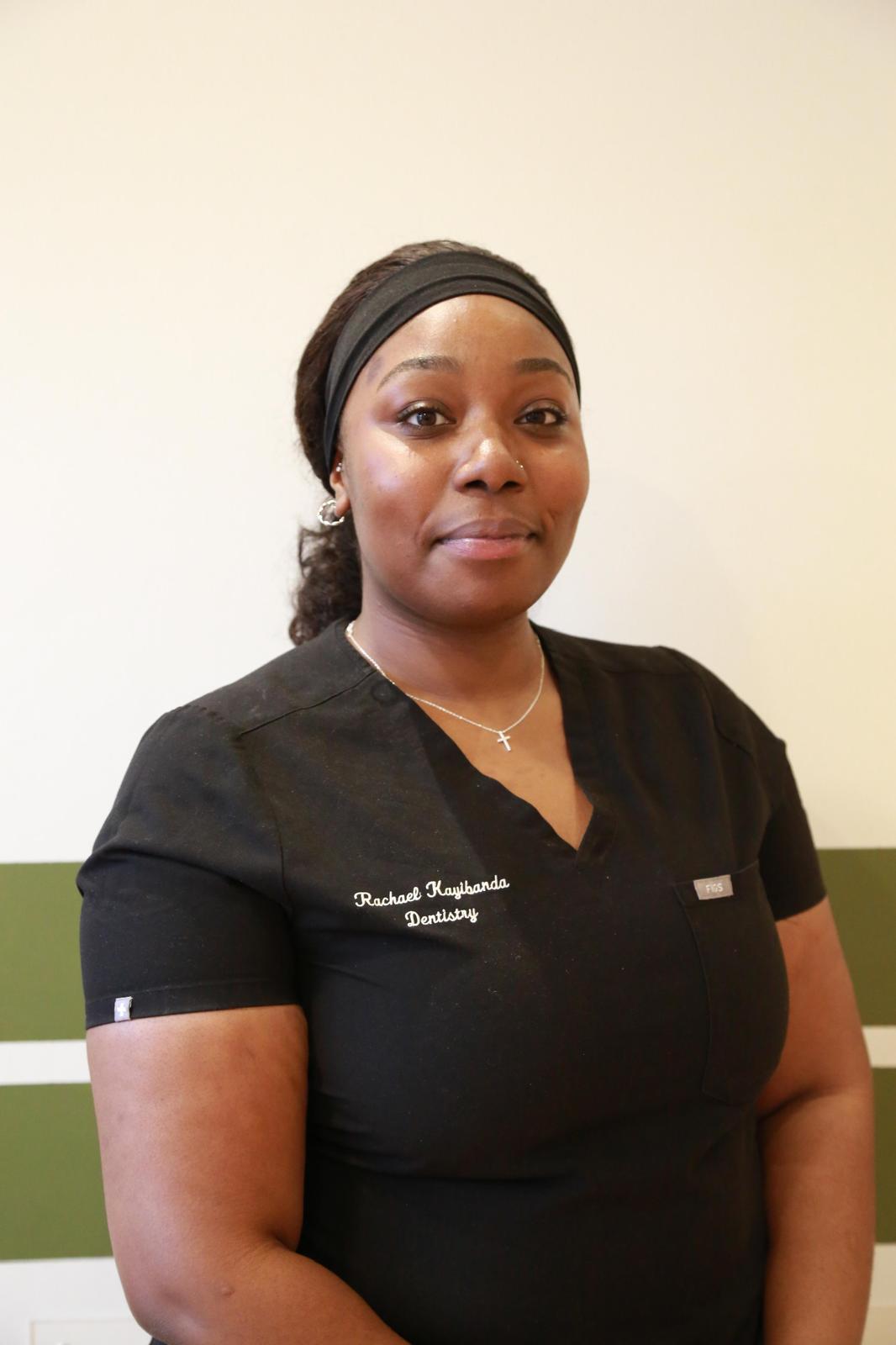
Gum disease treatment at St Margarets Smiles is led by our hygienist, Rachael Kayibanda, whose main clinical focus is the management of periodontal disease and prevention-based dentistry. Rachael holds an FDSc in Oral Health Sciences from the University of Essex and brings a wonderfully holistic approach to gum care - she takes the time to look beyond the symptoms and understand what's contributing to your gum health.
She works closely with our team of dentists to make sure your overall dental care is joined up. As Rachael often says, oral health is closely connected to overall wellbeing - and treating your gums properly isn't just about your mouth, it's about your whole-body health.
Why early gum disease treatment matters
Treating gum disease early can save you from much bigger - and much more expensive - problems further down the line.
- Prevent permanent tooth loss
- Stop bone loss in its tracks
- Improve breath and confidence
- Protect overall body health
- Save on future treatment costs
How much does gum disease treatment cost in Twickenham?
The total cost of treatment depends on the severity of your gum disease and how many sessions are needed to bring it under control. After your assessment, your hygienist will provide a clear treatment plan with all costs listed up front. Full pricing for all our treatments is available on our fee guide page.
Gum disease treatment from
Gum disease treatment at St Margarets Smiles is largely delivered through our hygienist, with sessions starting from £75 for a routine hygiene appointment and £140 for an extended hygiene session - the latter being more suitable for active gum disease treatment that requires deeper cleaning.
Your gum disease questions answered in Twickenham
Is bleeding when I brush a sign of gum disease?
Most likely, yes. Healthy gums shouldn't bleed when you brush or floss. If yours do, it's a sign of inflammation - usually the early stage of gum disease (gingivitis). The good news is that gingivitis is reversible with proper care, so it's well worth booking a gum health check rather than ignoring it.
Can gum disease be reversed?
Early gum disease (gingivitis) can be completely reversed with good treatment and home care. More advanced gum disease (periodontitis) can't be fully reversed, but it can be very effectively managed and stabilised - protecting your remaining teeth and stopping the disease from progressing further.
How is gum disease treated?
The cornerstone of gum disease treatment is a thorough professional clean to remove plaque and tartar from above and below the gum line. Your hygienist will also help you improve your brushing and flossing technique at home, and you'll typically need ongoing regular hygiene visits to keep things healthy.
Can gum disease affect my overall health?
Yes - research increasingly shows that gum disease is linked to wider health issues including heart disease, diabetes and even some pregnancy complications. Looking after your gums isn't just about your smile - it's about your whole-body health.
How often should I see the hygienist for gum health?
It depends on the state of your gums. Patients with healthy gums usually need a hygiene visit every six months. Those managing active gum disease may need more frequent visits - sometimes every three or four months - until the situation is stabilised.
Will I lose my teeth if I have gum disease?
Not necessarily. Untreated gum disease can lead to tooth loss, but with proper treatment and ongoing care, most patients keep their teeth for life. The earlier we catch and treat the disease, the better the long-term outcome.
Do you accept gum disease patients from outside St Margarets?
Yes, we welcome patients from across the TW1 postcode and the wider Richmond upon Thames borough - including East Twickenham, Isleworth, Whitton and Strawberry Hill. We're a short walk from St Margarets train station with pay-and-display parking right outside.